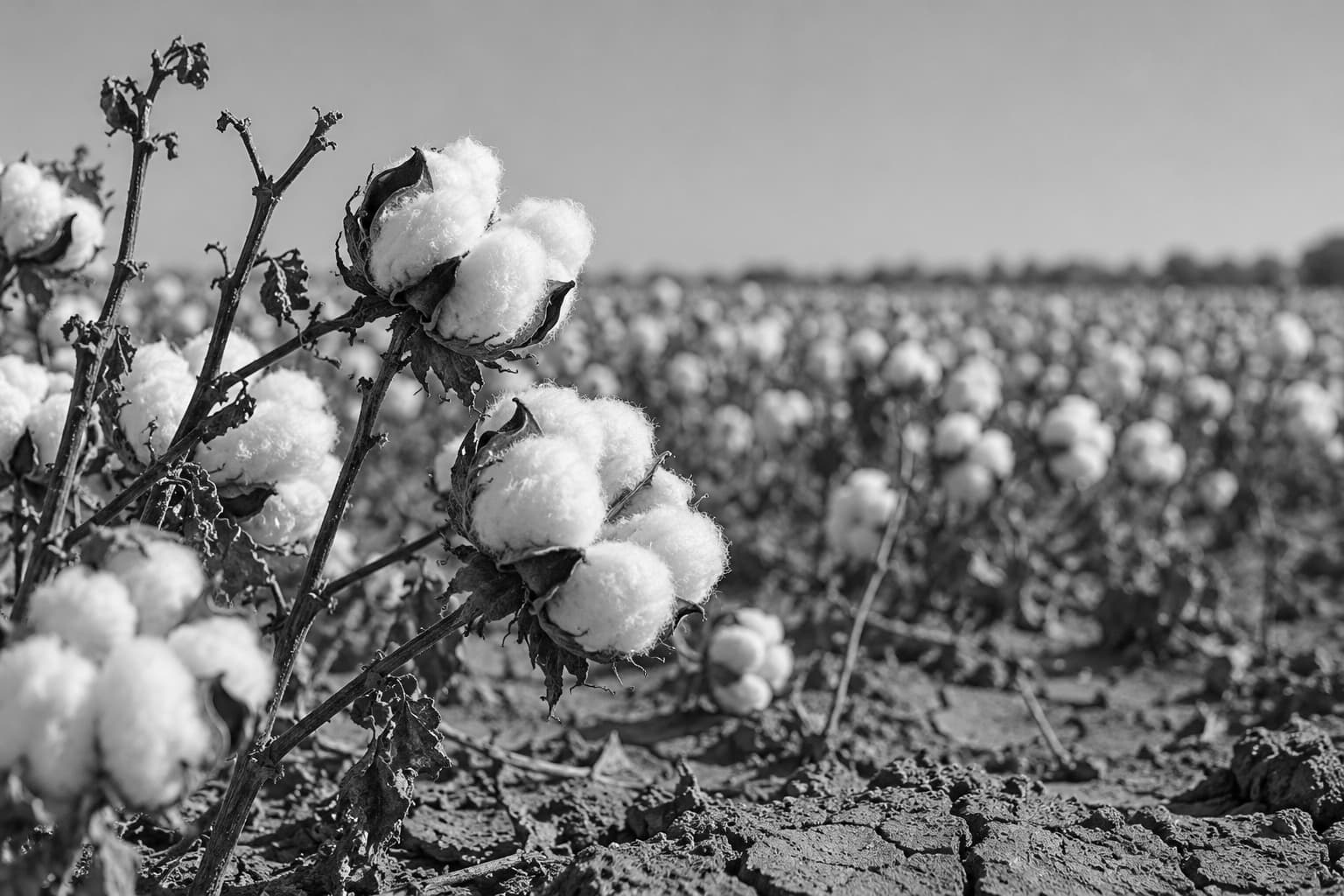
Color grade describes how light and how yellow cotton is, based on two HVI readings: reflectance (Rd) and yellowness (+b). For Upland cotton it is expressed as a two-digit code: the first digit runs from 1 (Good Middling) to 7 (Good Ordinary), plus 8 for Below Grade, and the second gives the color group, from 1 (White) to 5 (Yellow Stained). For example, 31 is Middling White.
What color grade measures
Color is described with two components. Rd shows how light or dark the sample is, that is, its grayness; +b shows how much yellow it has. Both are reported to the nearest tenth. In USDA classing, the official color grade is determined from these instrument measurements, unless a classer assigns a special condition code: 96 for a mixture of Upland and Pima, 97 for fire damaged and 98 for water damaged cotton.
The official Upland grades
Upland cotton has 25 official color grades and 5 Below Grade categories. The color groups are White, Light Spotted, Spotted, Tinged and Yellow Stained.
| Grade | White | Light Spotted | Spotted | Tinged | Yellow Stained |
|---|---|---|---|---|---|
| Good Middling | 11 | 12 | 13 | – | – |
| Strict Middling | 21 | 22 | 23 | 24 | 25 |
| Middling | 31 | 32 | 33 | 34 | 35 |
| Strict Low Middling | 41 | 42 | 43 | 44 | – |
| Low Middling | 51 | 52 | 53 | 54 | – |
| Strict Good Ordinary | 61 | 62 | 63 | – | – |
| Good Ordinary | 71 | – | – | – | – |
| Below Grade | 81 | 82 | 83 | 84 | 85 |
Within each color group, a lower first digit means a better grade; 11 is the highest grade.
Color quadrant
Each grade is subdivided to show differences within the same grade. USDA reports the two-digit grade plus a single-digit quadrant, and that three-digit number is found by locating the intersection of the Rd and +b readings on the color diagram. American Pima uses a separate system: color grades 1 to 7, reported as 01 to 07, with no quadrants.
Leaf grade is a separate measurement
Leaf grade measures leaf particles left in the lint, not color. For Upland it runs from 1 to 7, plus 8 for Below Grade, and the HVI determines it from the percent of the surface covered by trash and a particle count. Separately, the classer records extraneous matter such as bark, grass or seed coat fragments. Some price quotes combine everything in one string: Australian cotton, for example, is quoted on a base grade of 31-3-36, meaning color 31, leaf 3 and staple 36/32 of an inch.
Why it matters in spinning
Lower color reduces the fiber's dyeing properties and also hurts spinning efficiency. Color depends mostly on the weather in the last weeks of the season through harvest: with dry, open weather, proper defoliation and timely harvest, cotton comes out bright and white, grading 31 or better; with repeated rain, color darkens and grade and value decline. Poor module storage can also lower it.
Frequently asked questions
What does a code like 31-3 mean?
It depends on the document. On a USDA classing record, 31 is the color grade and the next digit is the quadrant within that grade. In a quote such as 31-3-36, the 3 is the leaf grade and 36 is the staple in 32nds of an inch. Always check which column you are reading.
What is the best color grade?
For Upland, 11 (Good Middling White) is the highest grade. Codes 81 to 85 are Below Grade.
Does Pima cotton use the same grades?
No. American Pima has its own color grades, 1 to 7, and does not use quadrants.
Sources
- USDA AMS: Cotton Classification, Understanding the Data
- 7 CFR 28.525: symbols and code numbers for cotton grades
- Alabama Cooperative Extension System: How to Think About Fiber Quality in Cotton
- Australian Classing Services: Grade and Price
See how to read a full HVI report in this guide or browse Max and Safe's cotton qualities.