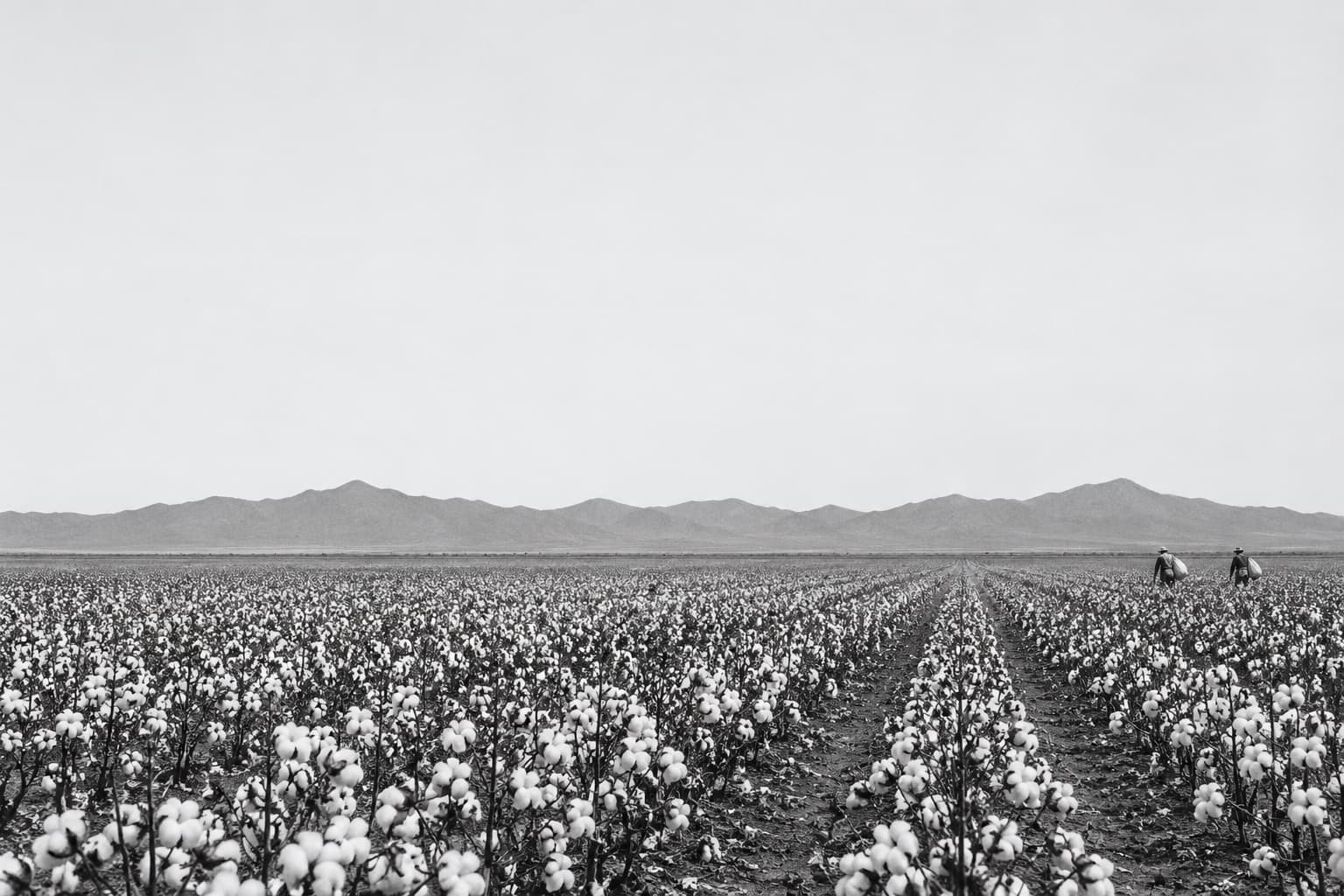
Mexican cotton is grown in the north of the country. According to SIAP, Mexico's agricultural statistics service, Chihuahua produced about 80% of national volume in 2025, followed by Baja California (the Mexicali Valley) and Coahuila (the Comarca Lagunera); Sonora, Durango and Tamaulipas plant smaller areas. USDA estimates the 2025/26 crop at about 0.66 million 480-lb bales, a historic low, and forecasts 0.87 million bales for 2026/27.
The cotton regions
- Chihuahua: by far the largest producer. Its main areas are the northwest (Ascensión, Janos, Casas Grandes, Buenaventura), the Juárez Valley and Ahumada, Ojinaga, and the south-central Delicias and Meoqui region.
- Baja California: the Mexicali Valley. About 6,000 hectares were planted in the 2025 cycle, according to the state office of SADER, Mexico's agriculture ministry.
- Coahuila and Durango: the Comarca Lagunera. SIAP data show Coahuila planted about 10,400 hectares in 2024 and Durango fewer than 900, both below 2022.
- Sonora: San Luis Río Colorado, next to the Mexicali Valley, and General Plutarco Elías Calles.
- Tamaulipas: the northern part of the state, on the Texas border, where harvest ends earlier than anywhere else in the country.
When cotton is planted and harvested
Each year, Mexico's state plant-health committees set planting windows and a deadline for destroying crop stalks, which in practice is the harvest deadline. This was the 2024 calendar published by SENASICA, the federal plant and animal health agency:
| Region | Planting window | Stalk destruction deadline |
|---|---|---|
| Northern Tamaulipas | Feb 15 to Mar 15 | Aug 31 |
| Mexicali Valley | Feb 15 to Apr 10 | Oct 1 to Dec 31 |
| Comarca Lagunera | Mar 20 to Apr 20 | Oct 31 |
| San Luis Río Colorado | Mar 15 to Apr 30 | Dec 15 |
| Chihuahua, Delicias region | Apr 1 to May 10 | Nov 30 |
| Chihuahua, north-northeast and Ojinaga | Apr 16 to May 20 | Nov 30 |
Northern Tamaulipas harvests in summer; the other regions harvest mainly in the fall. Rain can stretch the season: in the Mexicali Valley, the 2025 harvest started in late September and closed in March 2026.
How much Mexico produces
The two main sources measure different things:
- SIAP (SADER): reports seed cotton, meaning fiber still attached to the seed, in metric tons, by state, municipality, season and irrigated or rain-fed land.
- USDA FAS: its office in Mexico publishes GAIN reports (an annual in April plus updates during the year) on ginned lint, in 480-lb bales (217.7 kg), by August-to-July marketing year.
That is why the numbers cannot be compared directly. For 2026/27, USDA forecasts 0.87 million bales, 32% more than the previous year, on 37% more planted area as Chihuahua growers return to cotton. Production is still at historically low levels. USDA attributes the recent decline to high input costs, drought, low international prices and limited access to improved seed. To see how seed cotton becomes bales, read what cotton ginning is.
Mexico also imports cotton
Mexican spinning mills use more fiber than the country grows: about 1.3 million bales, according to USDA's 2026/27 forecast. The gap is filled with imports of around 0.6 million bales a year, and the United States is by far the main supplier. At the same time, Mexico exports part of its crop; USDA forecasts about 120,000 bales for 2026/27.
Frequently asked questions
Which Mexican state produces the most cotton?
Chihuahua, with about 80% of national volume in 2025 according to SIAP. Baja California and Coahuila follow.
When is cotton harvested in Mexico?
It depends on the region. Northern Tamaulipas harvests in summer; Mexicali, La Laguna, Sonora and Chihuahua harvest mainly in the fall, with stalk destruction deadlines between October and December.
How many bales of cotton does Mexico produce a year?
USDA estimates about 0.66 million 480-lb bales for 2025/26 and forecasts 0.87 million for 2026/27. SIAP publishes production in metric tons of seed cotton, not in bales.
Where does Mexico import its cotton from?
Mainly from the United States. Imports cover the gap between what Mexican mills consume and what the country harvests.
Sources
- USDA FAS: Mexico Cotton and Products Annual, April 2026
- USDA FAS: reports on Mexico
- SENASICA: cotton regulated-pest campaign report, January 2024 (Spanish)
- El Diario: Chihuahua's 2025 farm output, with SIAP data (Spanish)
To compare cottons by quality, see how to read HVI reports or browse Max and Safe's cotton qualities.